Send Callback
|
Caution This block is deprecated. Instead, use the Schedule Callback block. |

This block sends a Callback request to an agent.
|
Properties |
Values |
Description |
|---|---|---|
|
From |
String |
Email address of the sender. This is typically the service account for the contact center. This can be the actual email address of the caller. |
|
Recipient |
String |
Email address of recipient(s). Multiple addresses separated by a semicolon (;). These generally are prepopulated, but can be elicited through a Menu. |
|
CC |
String |
Email address of carbon copy recipient(s). Multiple addresses separated by a semicolon (;) These generally are prepopulated, but can be elicited through a Menu. |
|
BCC |
String |
Email address of blind carbon copy recipient(s). Multiple addresses separated by a semi colon (;). These generally are prepopulated, but can be elicited through a Menu. |
|
Subject |
String |
Subject of the email message. This should be prepopulated, but a choice can be given through the use of a Menu. |
|
Body |
String |
Since this a request for a callback, this should be prepopulated with some generic text. |
|
Attachment(s) |
String |
For use in third-party integrations. |
|
Callback Time |
String |
The time or day to call back. This is based on the local time of the connection Server: ICS, MCS or VCS and so must match the format, typically Month/Day/Year Hour:Minutes AM/ PM, for example, 1/18/2003 6:05 PM. For systems outside the United States, the date is usually Day/ Month/Year and the time format is in accordance. To test, configure a Caller Message block to $Now$ and get the current date and time. This information should be obtained from the caller, from a Menu block or from a Get Digits block. |
|
Callback Number |
String |
The phone number to which the callback should be made. Generally would be $line.ani$ but can be from a Getdigits block. Note The maximum outgoing call number or SIP URI is 370 characters. |
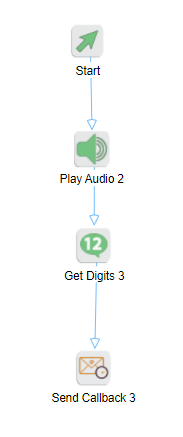
The following example shows how to use this block to elicit a callback number and time from an after-hours caller.